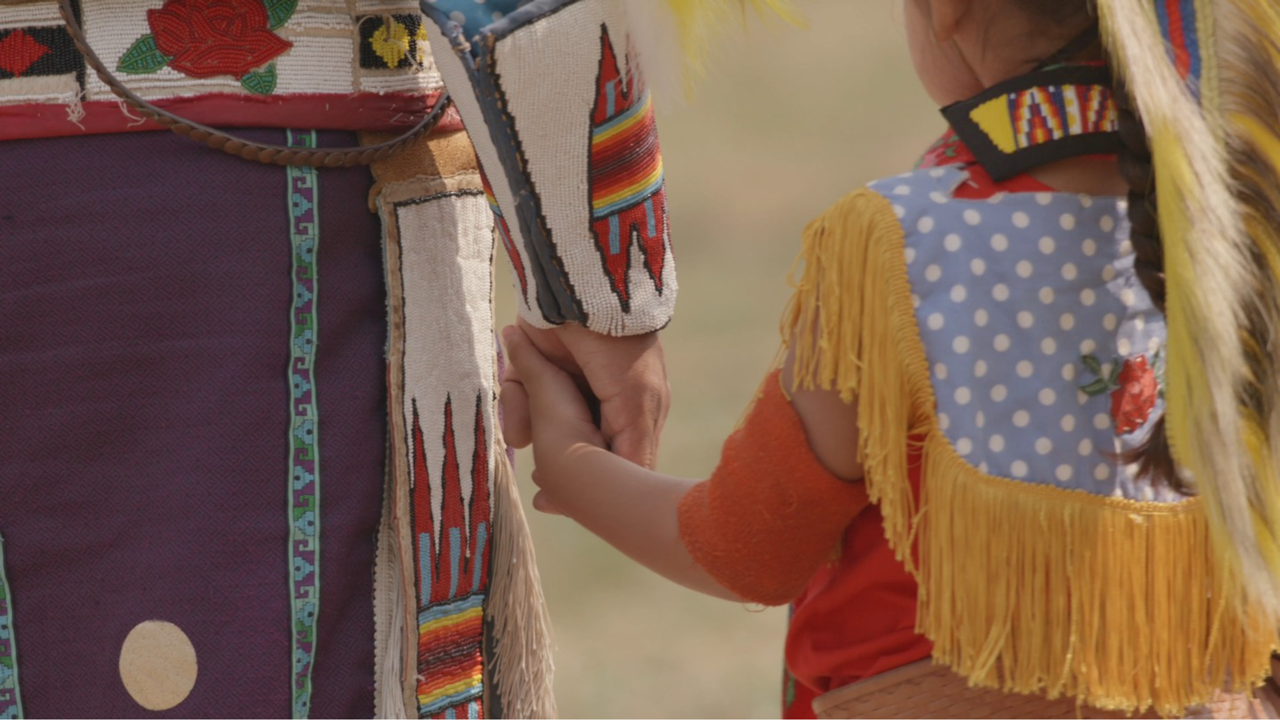
Powwow People builds on Sky Hopinka’s ongoing visual and cinematic practice—evocative, expressive, and grounded in intimacy. The film blends vérité-style observational filmmaking with lyrical visual language, poetic editing, and immersive sound design to create an atmospheric portrait of contemporary Native American life.
Powwow - which emerged in resistance to colonialism and cultural erasure - have for centuries organized native communities, preserved historical memory, and created power in shared cultural heritage. Powwow People is less a document of this culture than it is an embodiment of its power and resilience.
In a departure from the traditions of nonfiction filmmaking, the events depicted in Powwow People were instigated and resourced as part of the production, and subjects on screen were compensated for their performances. Hopinka served as both director and primary camera operator. His personal history with powwow—as a former dancer and the child of powwow performers—imbues the camera’s movement with immersive presence.
Drawing viewers into a multisensory experience of the powwow rather than an explanatory one — the pulse of the drum, the motion of the dancers, and the rhythm of narration - Hopinka collapses boundaries between observer and participant.
Personal reflections of powwow organizer Gina Bluebird Stacona and nonbinary dancer Jamie John are incorporated as voiceovers throughout the film, offering intimate, particular contexts for the significance of events taking place on screen. These voiceovers, in combination with the film’s visual and sonic rhythm, invite viewers into a kaleidoscopic experience rich with presence, complexity, and emotion.
Native American people across geographies, histories, and experiences see powwow as a source of renewal, joy, strength, and pride. By using the production of the film to organize a powwow, the film itself becomes a direct nurturer of the powwow tradition, and in turn the culture and community constituted through its practice.